
Paddle Safe: A Straight Talk on Safety
Hey paddlers,
Before we head out into the ocean, let’s have a straight talk about safety. I know it’s not the sexiest topic — everyone would rather chat about downwinds, surf entries, or catching runs — but honestly, safety is the one thing that keeps us all coming back for another paddle.
Here’s the bottom line: owning safety gear doesn’t make you safe.
Being safe means you’ve thought through the “what ifs,” you’ve got the right gear on you, and you’ve trained yourself to use it. Offshore, you are your own first responder. If something goes wrong, you may be on your own for longer than you think. So let’s stack the odds in your favor.
SHOP ESSENTIAL SAFETY GEAR HERE
Your Lifeline: The Leash
This one is non-negotiable. Without your ski, you’re not paddling anymore — you’re just swimming with a paddle and a PFD. Offshore, losing your ski even a few meters away is as good as losing it a kilometer away. Wind and swell move it faster than you can swim.
That’s why you need a leg leash. It’s your backup plan. But remember, leashes can break. Your first line of defense is always: don’t lose contact with your ski. The leash just buys you one more chance.

Your Buoyancy: The PFD
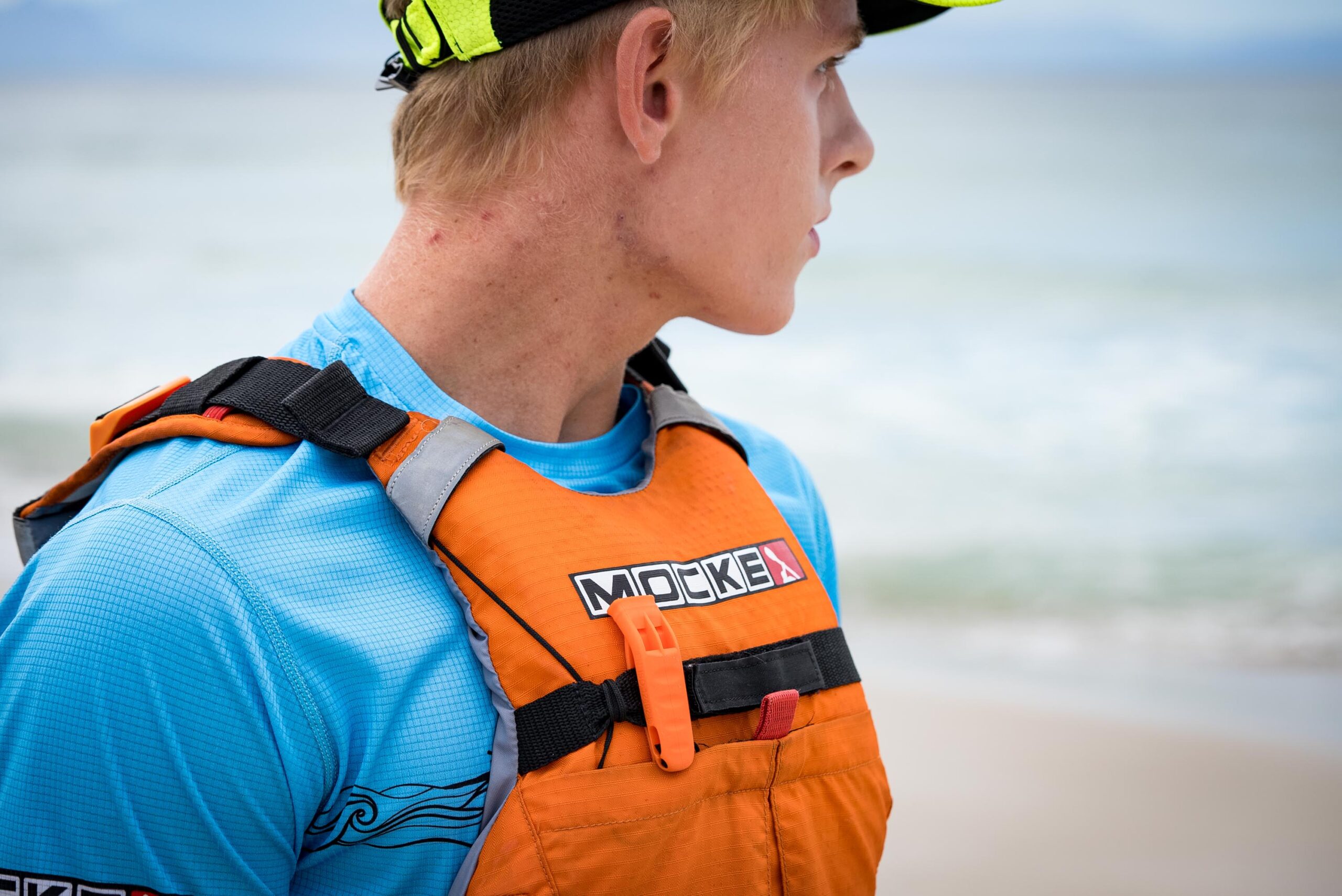
A life jacket isn’t about comfort or convenience — it’s about survival. You don’t know when or how you’ll land in the water. Maybe you can’t remount for some reason, or it might be a knock to the head, a cramp, or a medical event. A PFD is the difference between floating and sinking.
Choose one that fits snug, lets you paddle freely, and gives you storage for hydration, your phone, and maybe even your Emergency Steering Cord (we’ll get to that in a moment).
Your Voice: Communication Devices
Imagine you’re out there, something’s gone wrong, and you need help. Who’s going to know? That’s where communication comes in.
Take your cell phone in a dry bag. But don’t just carry it — practice using it in the water. A wet screen or fogged bag can turn your lifeline into dead weight.
Most phones now have an SOS function (power/volume button presses). Set it up before you paddle.
If you’re paddling in South Africa, make sure you’ve got the NSRI SafeTrx app running. It tracks your paddle, and if things go pear-shaped, NSRI can find you.
For remote or big-water paddling, consider a VHF radio or satellite tracker.
Think of it like this: your voice on land is the one thing that can bring help to you.

Your Backup Plan: The Emergency Steering Cord
This is one piece of gear we’ve added recently, and it’s a game-changer. If your rudder line snaps offshore, you’ve got a serious problem. No steering means you’re at the mercy of the wind and swell.
That’s why we developed the Mocke Emergency Steering Cord. It’s universal, fits all skis, and tucks neatly into your PFD. If the line snaps, you can fit it quickly and get your steering back. But here’s the thing: don’t just carry it. Train with it. Watch the how-to videos, set it up on your ski, and practice. The last place you want to learn how it works is 3 km out to sea.
Your Comfort (and Insurance): The Right Clothing
Safety isn’t just about flotation and communication — it’s also about staying warm. Cold water and strong winds are relentless. Hypothermia creeps up, clouds your judgment, and eats away your time.
In colder conditions, dress for immersion: thermal layers, neoprene, or European-style paddling kit.
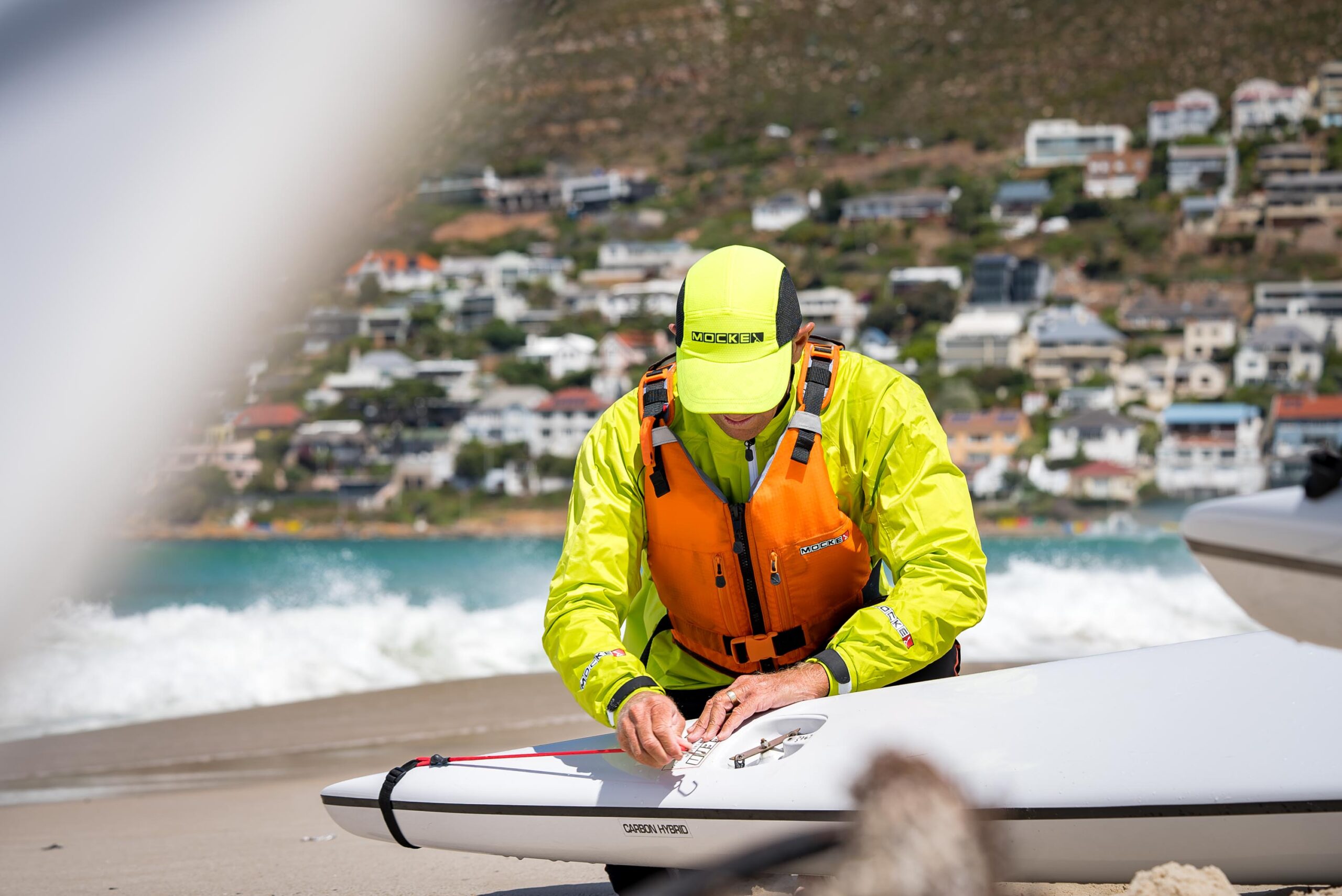
In windy or warm-water conditions, the Mocke Gust Paddling Jacket is a must-have. It keeps the wind chill off, acts as a shield, and gives you more time if you’re stranded offshore.
Warmth = time. Time = safety.
The Extras That Matter
Don’t overlook the small items. They can make the difference.
-
A whistle — simple, loud, effective.
-
Flares or a strobe light — unbeatable for visibility offshore.
-
Bright, reflective gear — so boats can see you.
-
Water and snacks — if rescue takes time.
-
Mini first aid kit — compact, but handy for cuts, scrapes, or worse.
The Mindset
Gear is one part. Mindset is the other.
-
Tell someone where you’re going and when you’ll be back.
-
Check the weather — don’t just glance at it, study it.
-
Know your limits. Push them only when you’re ready.
-
And above all: practice self-rescue. It might be the one that saves your life.
Here’s the kicker: Safety gear doesn’t hold you back — it sets you free. It gives you the confidence to push further, chase harder, and really enjoy the ocean, knowing you’ve prepared for the worst while aiming for the best.
So, next time you clip on your leash, zip up your PFD, and tuck your phone and Emergency Steering Cord into place, remember: it’s not paranoia. It’s respect for the ocean, and respect for yourself.
See you out there. Paddle safe.
[YOU CAN SHOP FOR ESSENTIAL SAFETY GEAR HERE]
